|
WHI |
|
 |
When and Where March 19, 2026 – January 3, 2027 | Museum of Anthropology, University of British Columbia, 6393 NW Marine Drive Guest Curator Luis Manuel González Reviewer Elizabeth Paterson |
||||||||||||||||||||||||||||||||||||||||
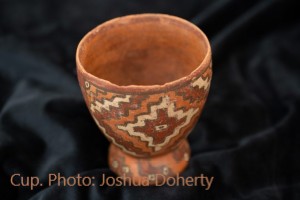
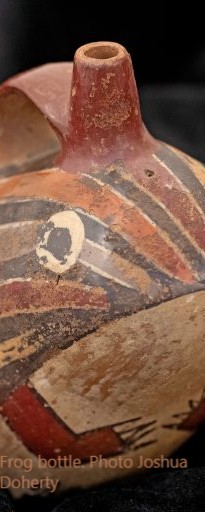
| Pass under the lintel into MOA’s exhibition of ancient Andean treasures, Tupananchiskama: Ancient Andean Cosmovision, and you will enter another world, far from the world we experience here, in time, space and thought. Over the doorway the Southern Cross and the constellations of the night sky of the Southern Hemisphere are displayed with their ancient names and meanings on a useful graphic nearby. This vision of the world together with the daylit physical world is translated and transcribed on more than a thousand objects dating back over 2,500 years, collected and donated to the Museum by Alan R. Sawyer. Everyday items of pottery, cloth, bone, shell and wood illustrate the mountains and rivers, legends and beliefs chiefly of two Peruvian cultures the Moche on the northern coast flourished about 100-800 CE, overlapping with the Nasca on the southern coast. The natural world is richly represented with painted birds, shrimp with vivid staring eyes, spirited frogs and many other animals. Many of the patterns are universal, meanders for rivers, pointed triangles for mountains, and the shapes are dictated by the characteristics of the material, the roundness of pottery or the grids of weaving. But the meanings of the shapes are unique to the cultures from which they come. So the Southern Cross, bright and unchanging in the night sky, is represented by a stepped cross pattern, the chakana, and is found abundantly painted on ceramics and woven into cloth and basketry. In the constellations of the night sky they saw representations of living beings who guided all human activity. Remarkably, they also saw them inhabiting the dark shadows of the galaxies, a way of thinking profoundly full of meaning. There is much to see and learn in this exhibition but perhaps the section that will remain longest in the mind is the display of wind instruments. Their sound fills the air in front of the case instrument by instrument, breath by breath. "Tupananchiskama” means “until life brings us together” reflecting the belief that the living have a vital relationship with the dead. Here it brings us into vigorous contact with lives lived deeply, long ago and far away.
© 2026
Elizabeth Paterson
|
|||||||||||||||||||||||||||||||||||||||||||
|
|
|||||||||||||||||||||||||||||||||||||||||||
|
|
|||||||||||||||||||||||||||||||||||||||||||
 TESPACE