
| JOHNJ |
JOHN |
 |
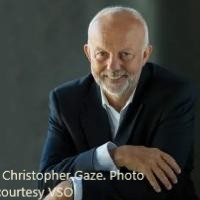
When & Where Thursday, March 26, 2026 at 2pm | Orpheum Theatre Conductor Trevor Wilson Host Christopher Gaze Programme John Williams’ Star Wars theme, Samuel Barber’s Adagio for Strings, Elmer Bernstein’s The Magnificent Seven Symphonic Suite, Nino Rota’s The Godfather plus other works Reviewer Alexander M | |
|
There is something especially comforting about the Tea and Trumpets Series, and this afternoon’s program leaned into that sense of familiarity of film scores. With Christopher Gaze as host and Maestro Trevor Wilson conducting, the Vancouver Symphony Orchestra offered an afternoon that felt both relaxed and thoughtfully put together, inviting the audience to revisit some of the cinematic world’s most memorable musical moments. The concert began with a burst of recognition. The brief 20th Century Fox Fanfare and John Williams’ Star Wars theme immediately drew the audience in. The brass players were in excellent form here, producing a bright and confident sound that gave these well-known themes their full impact. It was an energetic opening that set the mood without feeling overstated. Erich Korngold's score has a jaunty major key that reflects the “Merry Men’s” cheerful spirit. Korngold won the Oscar for Best Original Score and it is one of the best examples of music written in the style of the studio era of the thirties and forties - what is known as the Classical Hollywood era. It has the sudden loud chords at intense moments associated with film scores composed during this period. This came across clearly in performance. The orchestra highlighted both the bold, dramatic contrasts and the lighter character embedded in the score. Gaze’s account of Korngold’s sudden departure from Austria and the fate he narrowly escaped gave the music a deeper resonance, elevating the music from just an adventurous film score to something more profound. American composer Samuel Barber’s Adagio for Strings is a hauntingly mournful work that begins softly with the first violins. It evokes a certain sadness when hearing it through. Not surprisingly, it has been frequently heard at state funerals. The piece was used as incidental music throughout Oliver Stone’s 1986 film Platoon and was apparently, performed then by the Vancouver Symphony Orchestra. The performance here was restrained and focused, allowing the gradual build to unfold naturally. The emotional weight of the piece was communicated without exaggeration. The audience was swept into the piece’s profound sadness, and the quiet stillness in the auditorium spoke volumes.Elmer Bernstein’s epic music for the soundtrack of The Magnificent Seven Symphonic Suite is truly evocative of the Wild West and an excellent example of the Americana genre. John Sturges’ film is based on Akira Kurosawa’s 1954 Japanese film The Seven Samurai. The orchestra leaned into the rhythmic drive and sweeping lines of the music, with the brass section again playing a central role. There was a clear sense of momentum and space that suited the character of the score. The program continued with Nino Rota’s music from The Godfather, which was shaped with a gentle and nostalgic tone, capturing the film’s atmosphere of family, power, and tragedy. The strings were especially effective, playing with a sense of melancholy that matched the film’s iconic theme. Gaze shared a humorous anecdote about Marlon Brando’s famous mumble, lightening the mood before the orchestra dove into the lush, romantic melody. The concert then shifted gears to Alan Sivestri’s Back to the Future Suite, bringing a lighter, more playful energy to the room. The orchestra played with verve, evoking the spirit of adventure that made the film a classic. Gaze even took a moment to note that Michael J. Fox, the star of the film, hails from Burnaby, which helped ground the performance with a local connection. From the fun of Back to the Future, the program smoothly transitioned into Ennio Morricone’s heartfelt Cinema Paradiso for Solo Violin, that featured concertmaster Nicholas Wright. The music evokes a sense of longing and nostalgia for lost innocence, while the orchestra’s warm playing, beautifully mirrored the film’s delicate exploration of love, memory, and the magic of cinema. One of the most delightful moments of the program came when Gaze recited the poem "Sea Feve"r by John Masefield alongside the Pirates of the Caribbean music. The pairing of these words with Hans Zimmer’s iconic score created a sense of adventure. The orchestra rounded out their regular program with James Horner’s haunting Titanic along with Céline Dion’s incredibly popular ”My Heart Will Go On” followed by John Williams’ The Flying Theme from E.T. the Extra-Terrestrial. The score embodies the friendship between a young boy and a friendly alien that is at the heart of the film.
Encores are an honoured tradition at Tea & Trumpets concerts, and
on this occasion the orchestra didn’t disappoint with a generous
undertaking of The March of the Storm Troopers from Star Wars.
This was an enjoyable and well-paced program that balanced entertainment
with substance and served as a reminder of how strongly these film scores
continue to resonate in live performance. © 2026 Alexander M |
|||
|
|
|||
|
|
|||
 The
Vancouver Symphony Orchestra
The
Vancouver Symphony Orchestra